FCT
ACReSAL Project Trains FCT Residents in Home Gardening, Food Preservation and Nutrition for Household Empowerment
The Federal Capital Territory Agro-Climatic Resilience in Semi-Arid Landscapes (ACReSAL) Project has intensified efforts to strengthen household food systems by training community members across the six Area Councils of the FCT in home gardening, food preservation and nutrition practices.
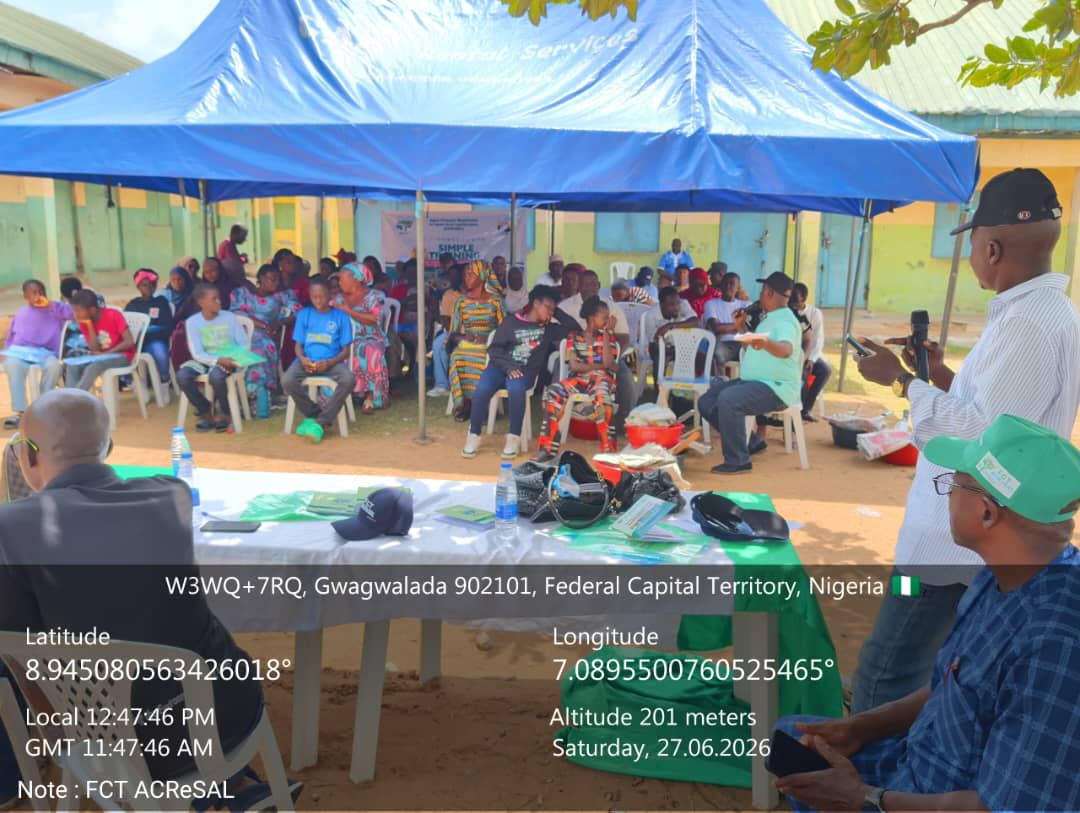
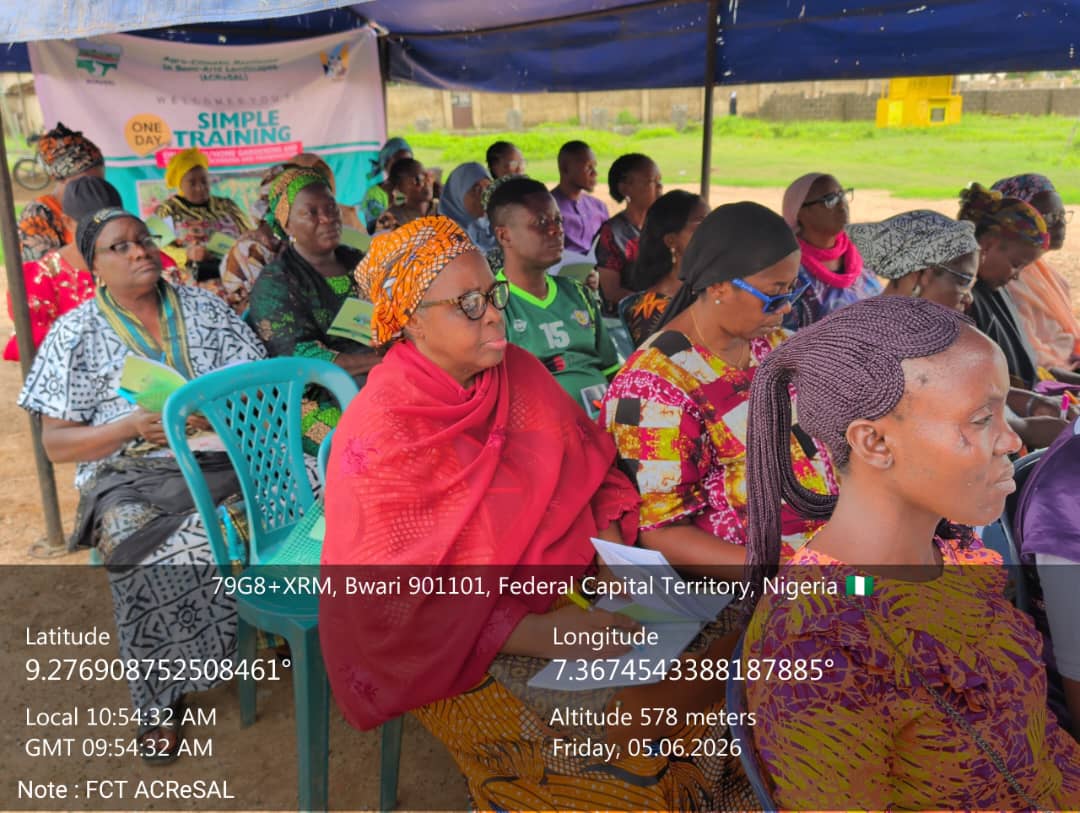
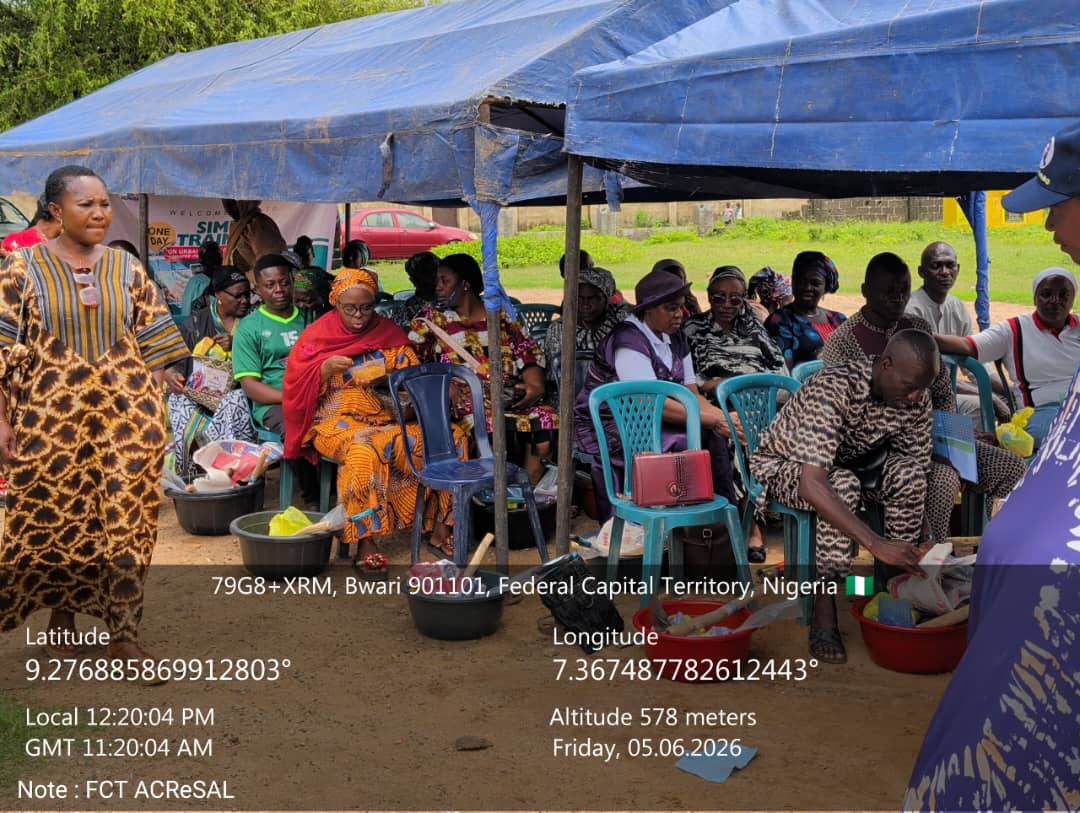
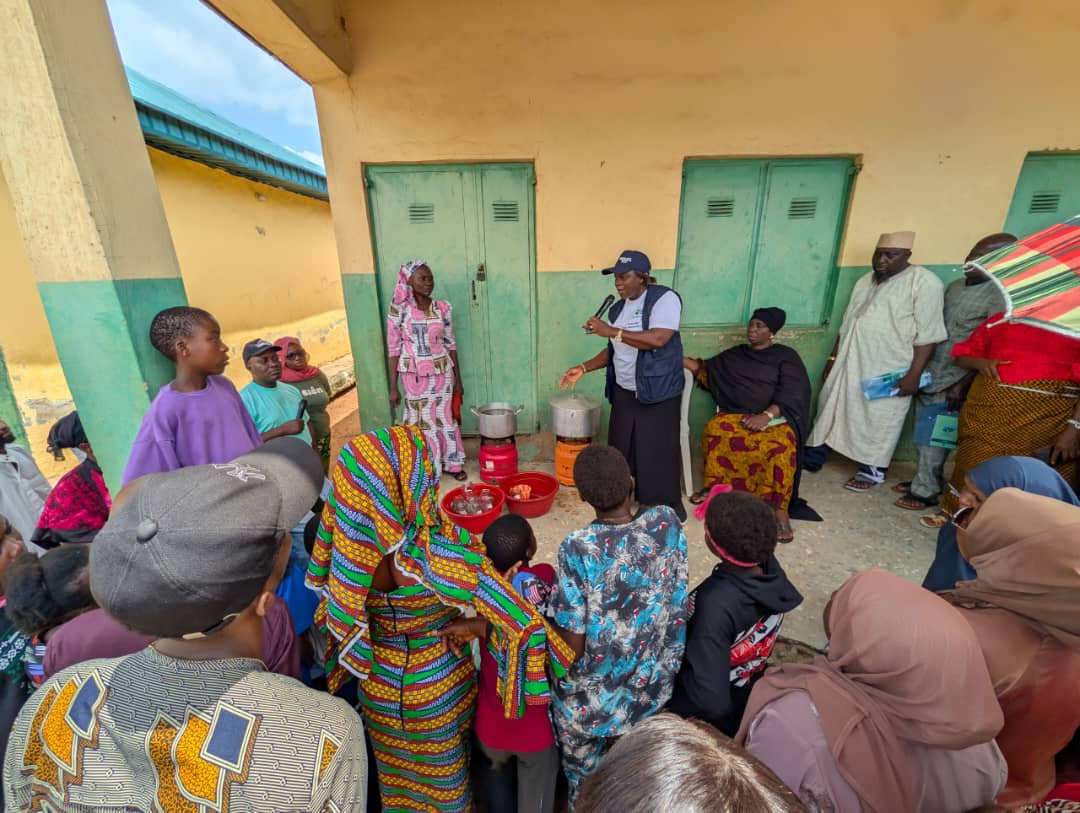
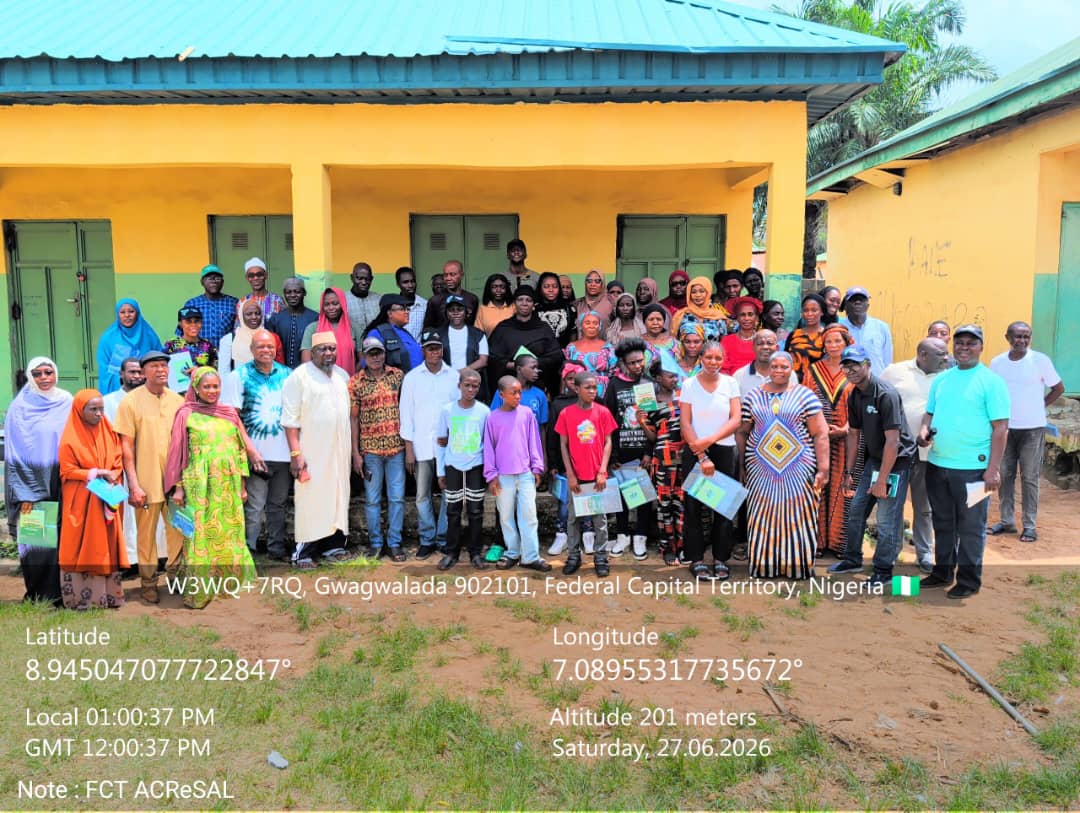
The Project recently organized a training session at the FCDA Staff Housing Estate in Gwagwalada, which brought together about 60 participants, both men and women from the estate to take part in the initiative.
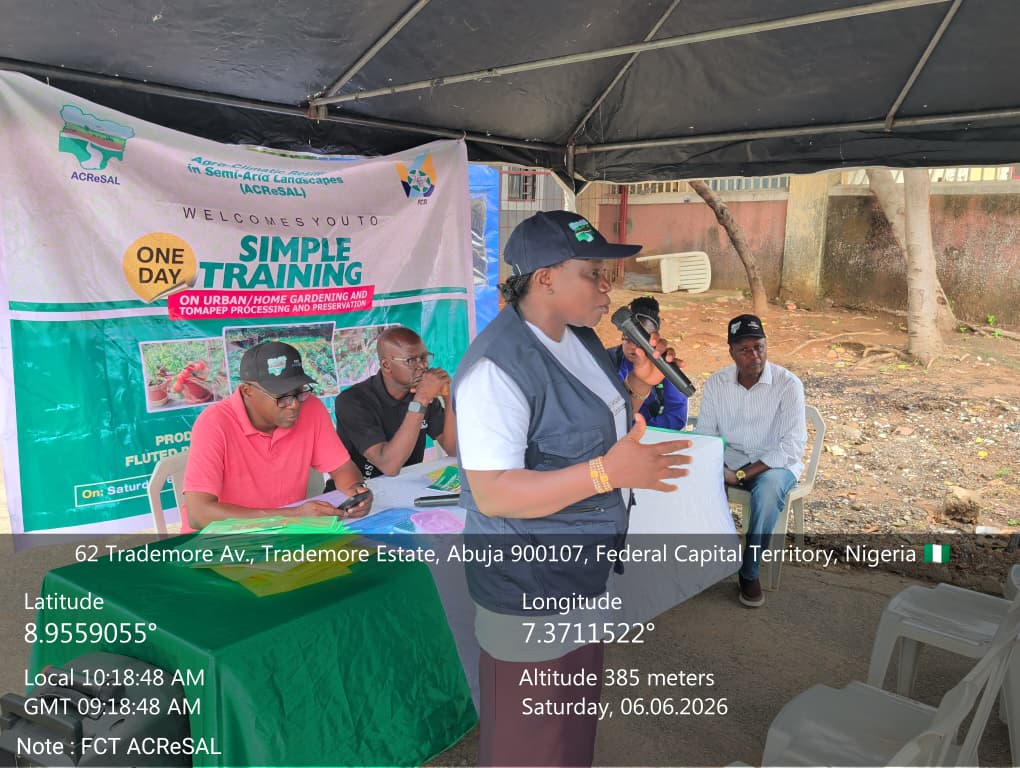
Delivering the opening remarks on behalf of the FCT ACReSAL Project Coordinator, Mrs. Caroline Opara, the Monitoring and Evaluation Officer, Mrs. Margareth Oladoja, explained that the initiative aligns with the project’s objectives of restoring degraded landscapes, promoting climate-smart agriculture and improving community livelihoods.
She emphasized that empowering community members, particularly women who are often the primary managers of household with sustainable agricultural practices is vital for family wellbeing and community resilience.
“Empowering women with sustainable agricultural practices is vital for family wellbeing and community resilience,” Mrs. Oladoja stated. “When you train a woman, you equip an entire household with the tools to thrive. However, we recognize that men also play a crucial role and their participation in this training will have better impact.”
In his technical presentation, the resource person, Mr. Mathew Chime, an Agricultural Extension Services expert, provided detailed guidance on soil preparation, crop selection, effective planting techniques, sack gardening and sustainable pest management. He explained that the skills acquired would help reduce reliance on market vegetables, enabling families to save money while minimizing exposure to poorly handled or chemically treated food items.
“Growing your own food gives you control over what your family eats,” Mr. Chime noted. “It is the surest way to guarantee freshness and safety.”
Mrs. Oladoja also delivered a presentation on food preservation, emphasizing the importance of simple yet efficient storage techniques that ensure families have access to well-preserved, healthy foods while helping to minimize waste.
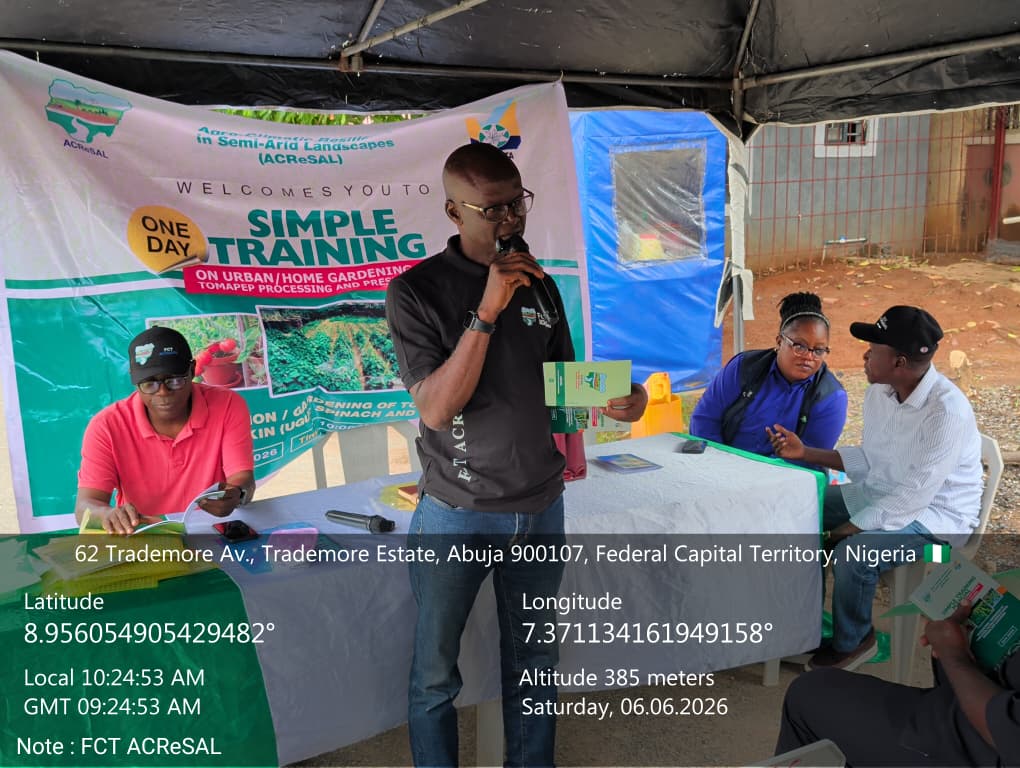
She revealed that the project has already conducted similar trainings at the Trademore Estate in Lugbe and in Bwari Area Council. and urged beneficiaries to cascade the knowledge to their neighbours for greater impact.
“The Project intends to take this training to more households across the FCT. Our goal is to reach as many families as possible. We have already trained 100 participants at the Trademore Estate in Lugbe and in Bwari Area Council,” she said. “I encourage those of you who have had the opportunity to benefit from this training to also share the knowledge with your neighbours.”
Speaking on the impact of the training, Mrs. Fatima Bello, a beneficiary from the estate, expressed her appreciation, noting that the knowledge gained would help her family eat healthier while cutting down on daily food expenses.
Mr. Iyiola Ogundele, another participant, commended the ACReSAL Project for its inclusive approach. “I initially thought this training was only for women, but I am glad I attended. As a man, I now understand how I can support my wife in establishing a home garden and methods we can adopt in food preservation to maintain its freshness” he said.
At the conclusion of the workshop, each participant received a starter pack containing cutlasses, hoes, and assorted seeds to enable them to immediately establish their own home gardens.
The Project recently organized a training session at the FCDA Staff Housing Estate in Gwagwalada, which brought together about 60 participants, both men and women from the estate to take part in the initiative.
Delivering the opening remarks on behalf of the FCT ACReSAL Project Coordinator, Mrs. Caroline Opara, the Monitoring and Evaluation Officer, Mrs. Margareth Oladoja, explained that the initiative aligns with the project’s objectives of restoring degraded landscapes, promoting climate-smart agriculture and improving community livelihoods.
She emphasized that empowering community members, particularly women who are often the primary managers of household with sustainable agricultural practices is vital for family wellbeing and community resilience.
“Empowering women with sustainable agricultural practices is vital for family wellbeing and community resilience,” Mrs. Oladoja stated. “When you train a woman, you equip an entire household with the tools to thrive. However, we recognize that men also play a crucial role and their participation in this training will have better impact.”
In his technical presentation, the resource person, Mr. Mathew Chime, an Agricultural Extension Services expert, provided detailed guidance on soil preparation, crop selection, effective planting techniques, sack gardening and sustainable pest management. He explained that the skills acquired would help reduce reliance on market vegetables, enabling families to save money while minimizing exposure to poorly handled or chemically treated food items.
“Growing your own food gives you control over what your family eats,” Mr. Chime noted. “It is the surest way to guarantee freshness and safety.”
Mrs. Oladoja also delivered a presentation on food preservation, emphasizing the importance of simple yet efficient storage techniques that ensure families have access to well-preserved, healthy foods while helping to minimize waste.
She revealed that the project has already conducted similar trainings at the Trademore Estate in Lugbe and in Bwari Area Council. and urged beneficiaries to cascade the knowledge to their neighbours for greater impact.
“The Project intends to take this training to more households across the FCT. Our goal is to reach as many families as possible. We have already trained 100 participants at the Trademore Estate in Lugbe and in Bwari Area Council,” she said. “I encourage those of you who have had the opportunity to benefit from this training to also share the knowledge with your neighbours.”
Speaking on the impact of the training, Mrs. Fatima Bello, a beneficiary from the estate, expressed her appreciation, noting that the knowledge gained would help her family eat healthier while cutting down on daily food expenses.
Mr. Iyiola Ogundele, another participant, commended the ACReSAL Project for its inclusive approach. “I initially thought this training was only for women, but I am glad I attended. As a man, I now understand how I can support my wife in establishing a home garden and methods we can adopt in food preservation to maintain its freshness” he said.
At the conclusion of the workshop, each participant received a starter pack containing cutlasses, hoes, and assorted seeds to enable them to immediately establish their own home gardens.
Photo Gallery